
Daylight
Look at the diamond beside a window. Even brightness and crisp, brief flashes tell you more than intense display lighting.
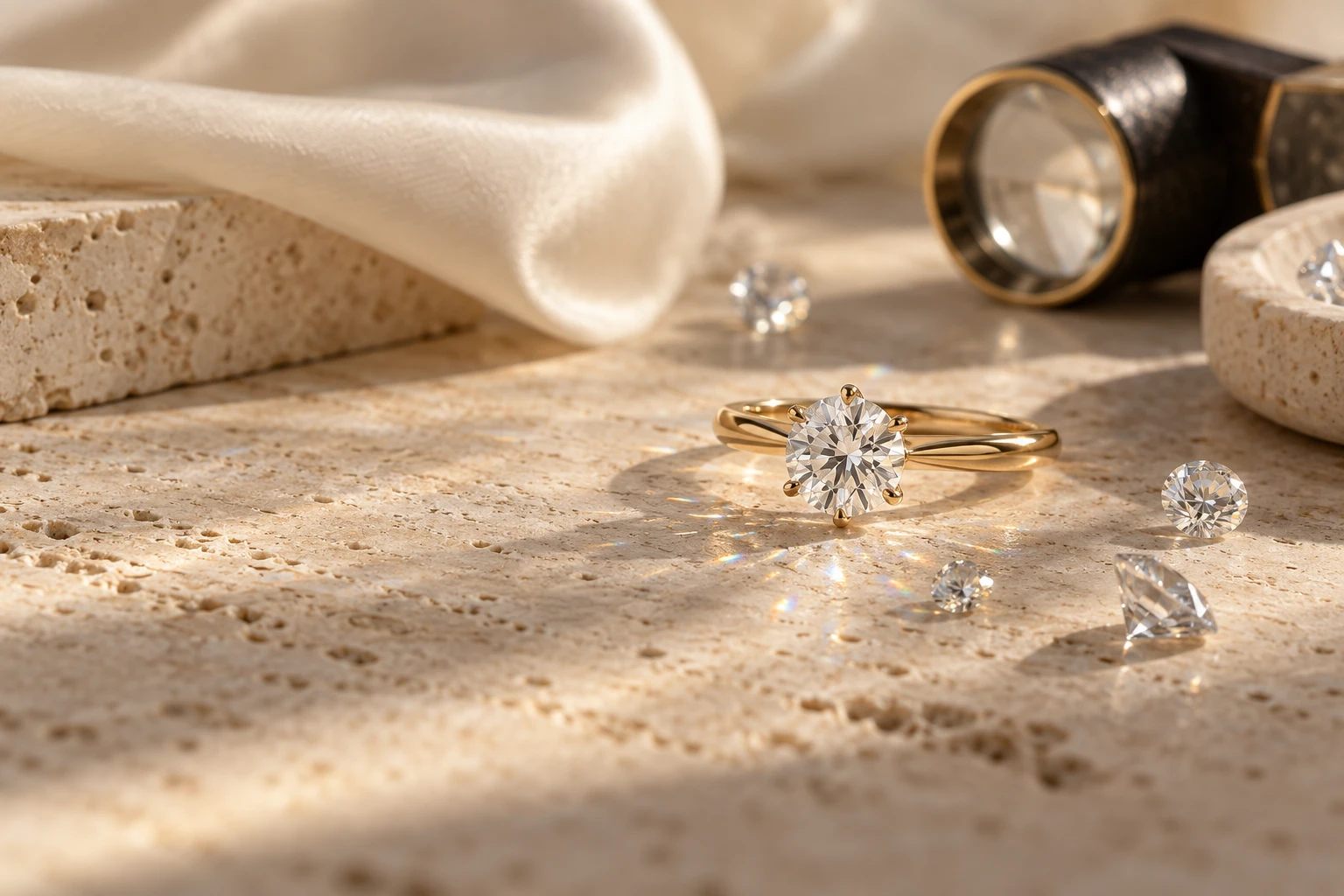
Living brilliance comes from precise proportions, clean facets and the light a stone reflects back to you.
A diamond does not store light. It receives it, guides it through a network of facets and reflects it back out. This is why a beautiful stone feels alive: it changes with the movement of your hand, catches brief flashes and remains expressive even in soft daylight.
Choosing a diamond by size alone is like choosing music by volume. Its character comes from its proportions, the quality of its cut and the way it sits in its setting.
Each facet acts like a tiny mirror. When the angles and depth are well judged, light enters through the table, reflects inside the stone and returns to the eye. This creates brilliance: the diamond’s white internal light.
Brief flashes of colour are called fire. The contrast between light and dark areas creates scintillation as the stone moves. A beautiful diamond balances these effects without looking glassy or overwhelmed by sparkle.
That is why cut quality can influence your impression more than a small difference in carat weight. Good proportions make a stone appear open and distinct without relying on size alone.
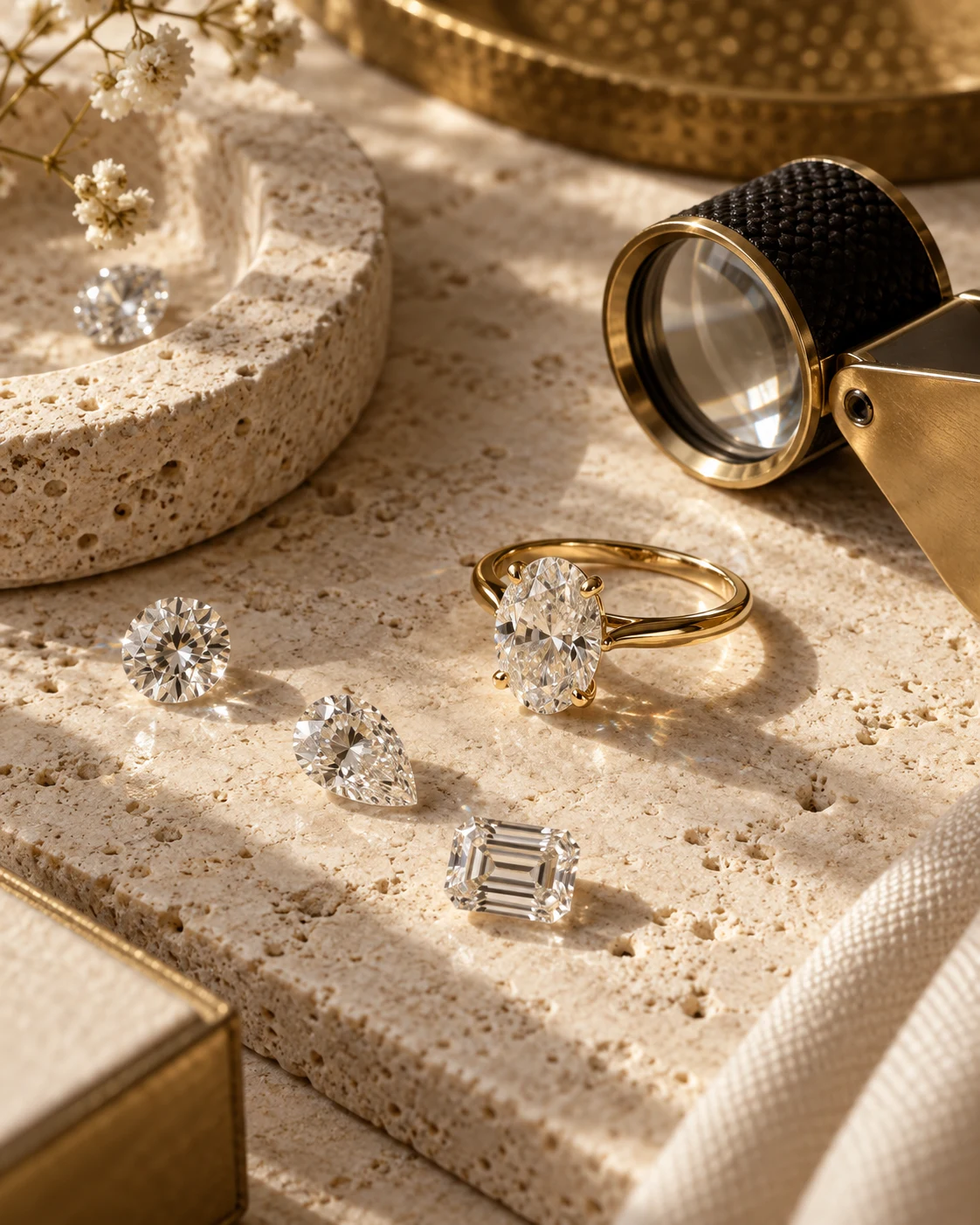
Turn the piece near a window, then in more diffused light. In a lively diamond, reflections move across the surface rather than leaving a permanently dark centre.
Carat weight measures mass, but it cannot describe beauty on its own. Two diamonds of the same weight can look different because of their diameter, depth and facet pattern.
Colour is graded by the absence of noticeable tint. A softly warm stone can look particularly harmonious in yellow gold, so the highest colour grade is not always essential.
Clarity describes inclusions within a diamond. Many cannot be seen without magnification and remain an invisible signature of the individual stone. For an everyday piece, what matters most is that inclusions do not interfere with light or stand out to the naked eye.
Cut brings these qualities together. It determines how confidently a diamond shines in real life, beyond the directed lighting of a display.
Look at the diamond beside a window. Even brightness and crisp, brief flashes tell you more than intense display lighting.
Slowly turn the ring. Light should travel from facet to facet, creating a rhythm rather than a single fixed white spot.
Set the specifications aside for a moment. Do you want to keep looking at this stone? Your personal response matters too.
A setting continues the work of the cut. Fine prongs open a stone to the light, a smooth bezel gives a quieter silhouette, and a halo of small diamonds enhances the centre stone. There is no single right choice: each creates a different mood.
For an everyday ring, consider a low profile, a secure fit and comfort between the fingers. Earrings should feel balanced; a pendant should sit where the stone can catch the light.
To keep the brilliance clear, gently wash the piece in warm water with a mild cleaner and use a soft brush to clean behind the stone. This is where a film can collect and soften the light.
The right diamond turns the precision of its cut into something personal. It invites a closer look today and becomes a piece you will want to wear for years.


